“The best preparation we can offer our children for a digital future is an analog childhood and an analog classroom, and children thrive when parents and educators fight for them, together.” — Emily Cherkin, founder of The Screentime Consultant.
Over the past two decades, perhaps nothing has changed education more than technology. It started with overhead projectors, then projectors built into every classroom, and eventually interactive smartboards. Computer labs and typing classes gave way to laptops and Chromebooks for every student. Learning management systems like Google Classroom and Canvas transformed how assignments are given and completed, and now AI is used to help students complete everything from math homework to research papers.
Each innovation has arrived with the same hopeful promise: technology will help students learn more efficiently, personalize instruction, and better prepare them for the future. In reality, we have lost face-to-face instruction and built a barrier to learning that is setting students up for failure when they leave the classroom.
Has More Technology Made Better Thinkers?
As we see technology increase, and students’ ability to learn and reason decrease, parents and educators are asking an important question: Has more technology actually produced better thinkers?
More and more child development experts and educators are expressing concern that constant reliance on screens and digital tools comes at a cost. Students have become accustomed to immediate answers, constant automatic assistance, and endless digital stimulation, leaving them with fewer opportunities to wrestle with difficult topics, ask questions, or develop critical thinking skills.
In a recent address for the Alliance for Responsible Citizenship, actress and children’s advocate Sophie Winkleman challenged educators to reconsider the role technology plays in schools. After outlining concerns about excessive screen use and the growing influence of artificial intelligence, she quoted AI strategist James Poulter: “To prepare students for the future, we need to teach the subjects that form character—classics, English, languages, history, philosophy. Skills can be acquired.”
Preparing Students for More Than the Future
Poulter and Winkleman alike know the future will undoubtedly require students to understand technology. But more importantly, it will require men and women of character and wisdom.
At Greenville Classical Academy, this conviction has always been at the heart of our mission. We seek to provide a distinctly Christ-centered, biblical, and classical education that forms students who glorify God in thought, word, and deed. Our goal is not simply to prepare students for the next technological advancement but to cultivate minds that seek truth, recognize beauty, and pursue goodness well beyond the years that they walk these halls.
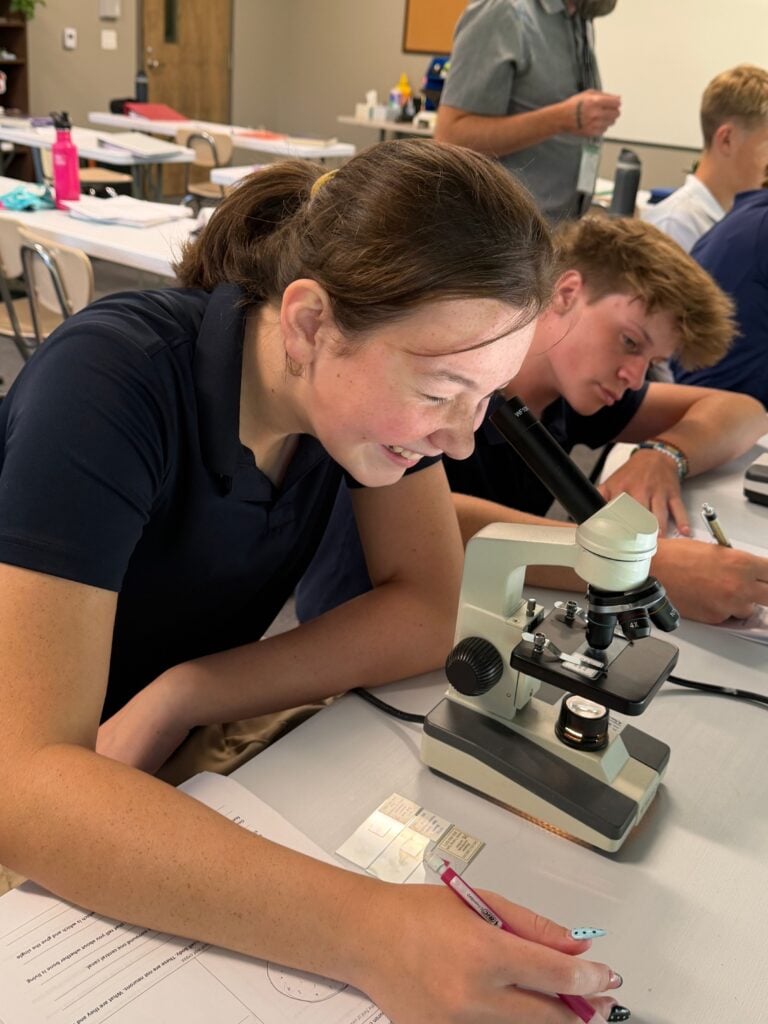
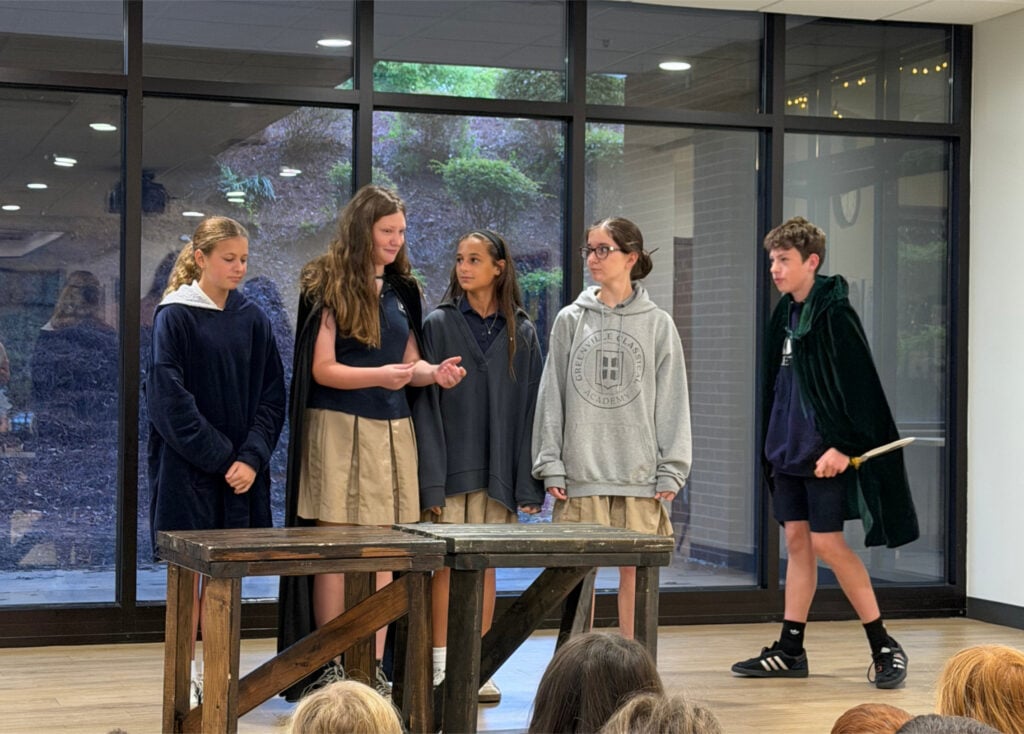
That is why our classrooms feature study and reading of great books, cursive and handwritten work, recitation, memorization, careful reasoning, and debate. Students study Scripture, history, literature, Latin, mathematics, science, and the fine arts, not because these subjects are remnants or relics of the past, but because they have shaped thoughtful, virtuous people for centuries and continue to shape our students today.
What an Analog Classroom Cultivates
There is something profound about studying the classics, solving a math problem with pencil and paper, wrestling through an argument before arriving at an answer, or engaging in thoughtful conversation with teachers and classmates. These experiences develop habits that no device can imitate: patience, humility, perseverance, critical thinking, and more.
This does not mean technology has no place in education because technology is a valuable tool when used wisely and purposefully. But tools should remain tools. They should never replace the work of human beings forming the mind and cultivating the soul. These are the qualities a classical Christian education has always sought to cultivate. In an increasingly digital world, the most valuable education, one that GCA continues to strive for, remains intentionally analog.
What Our Children Need in a Digital World: Critical Thinking and Wisdom
Our children do not need every answer instantly available. They need opportunities to wonder and ask questions, to struggle, reason, and express their findings eloquently. They need to discover truth through careful study and meaningful relationships with teachers and peers who know them.
At Greenville Classical Academy, we care deeply about more than what our students learn. We care about who they are becoming through their education. We want to cultivate students who seek truth, grow in wisdom, and glorify God in their thoughts, words, and deeds.